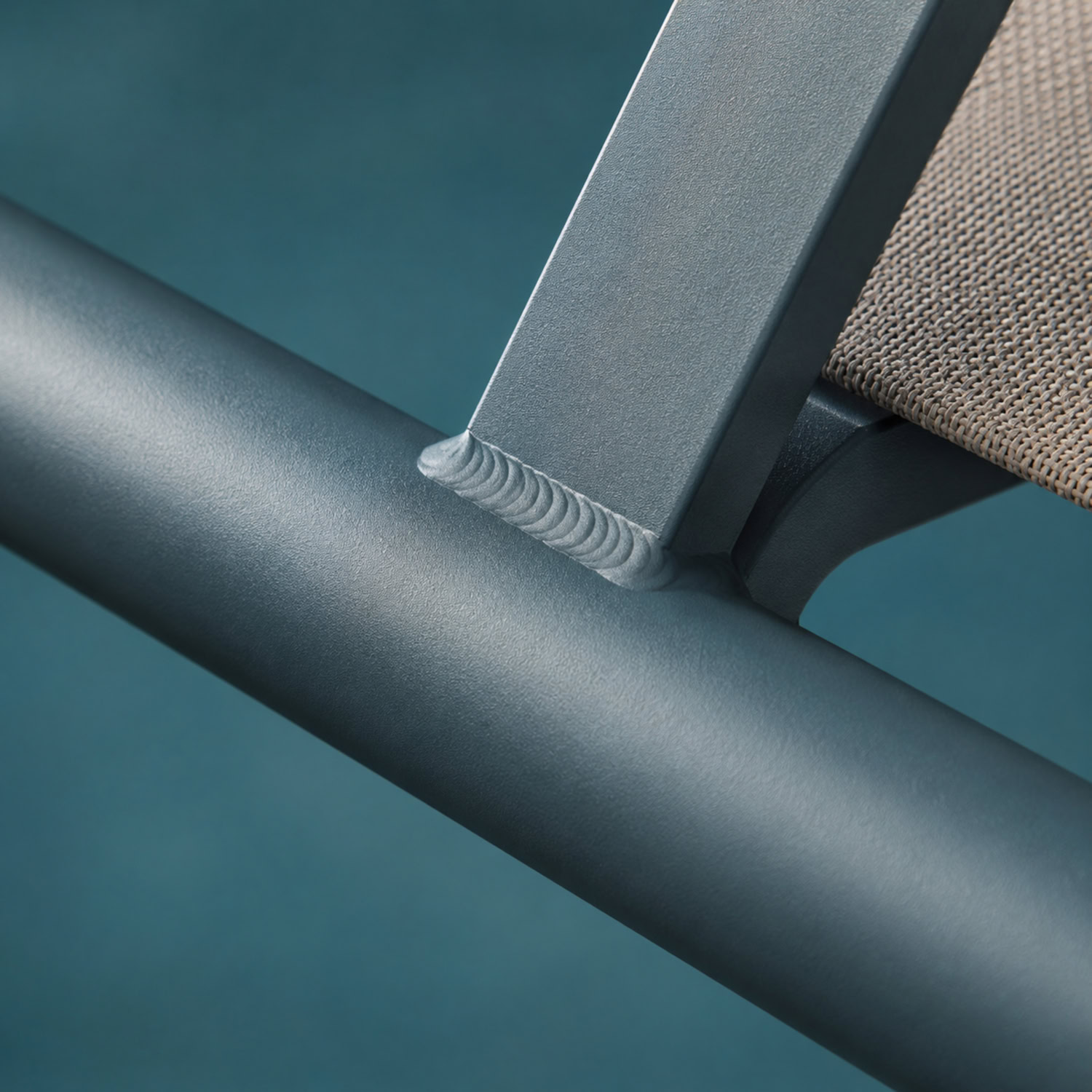
Powder-coated aluminum
Rust-proof, light enough to move, low upkeep. Most common on quality residential loungers. Look for thick-gauge tube and welded joints; light frames blow around in strong wind, so anchor them.
The same long reclining chair comes in wildly different frames, fabrics, and prices. Here is every decision that matters, in the order it matters, so you buy once.
The frame sets your budget, the weight, the upkeep, and how long the chair survives outside. Powder-coated aluminum, teak, and HDPE poly lumber are the three worth your money for year-round use. Then choose between a sling seat and a cushioned one, and match both to your climate and space. A mid-range aluminum lounger with a sling or solution-dyed acrylic cushions handles most homes well, at $250 to $400.
Aluminum for light and easy, teak for looks and longevity, HDPE for coastal and zero-fuss.
Sling dries fast and needs no care. Cushions feel plush but need quick-dry foam and storage.
Welded joints, rated weight capacity, and at least three recline positions.
Three frames survive sun, rain, humidity, and wind for years. A few others come with real tradeoffs.
Rust-proof, light enough to move, low upkeep. Most common on quality residential loungers. Look for thick-gauge tube and welded joints; light frames blow around in strong wind, so anchor them.
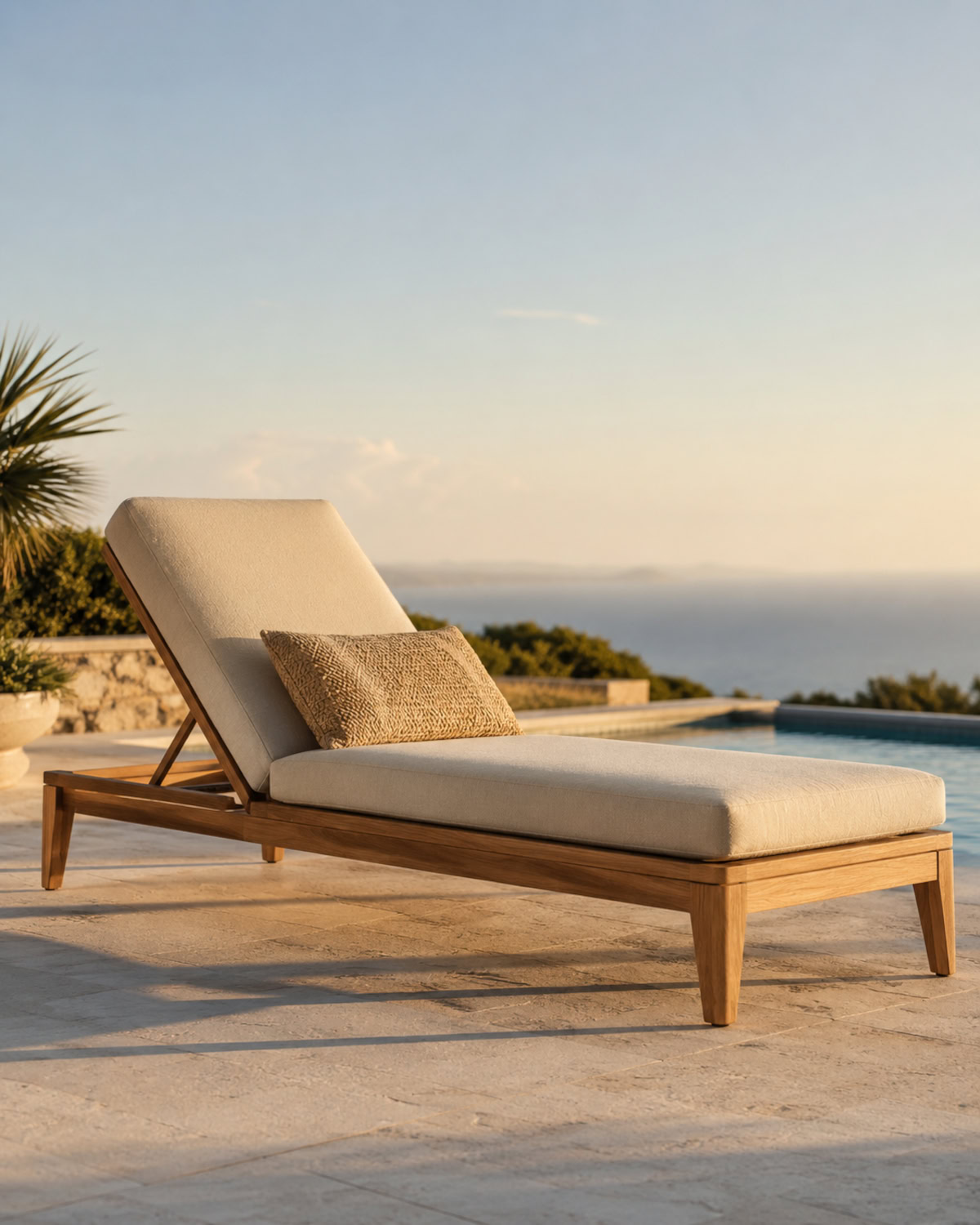
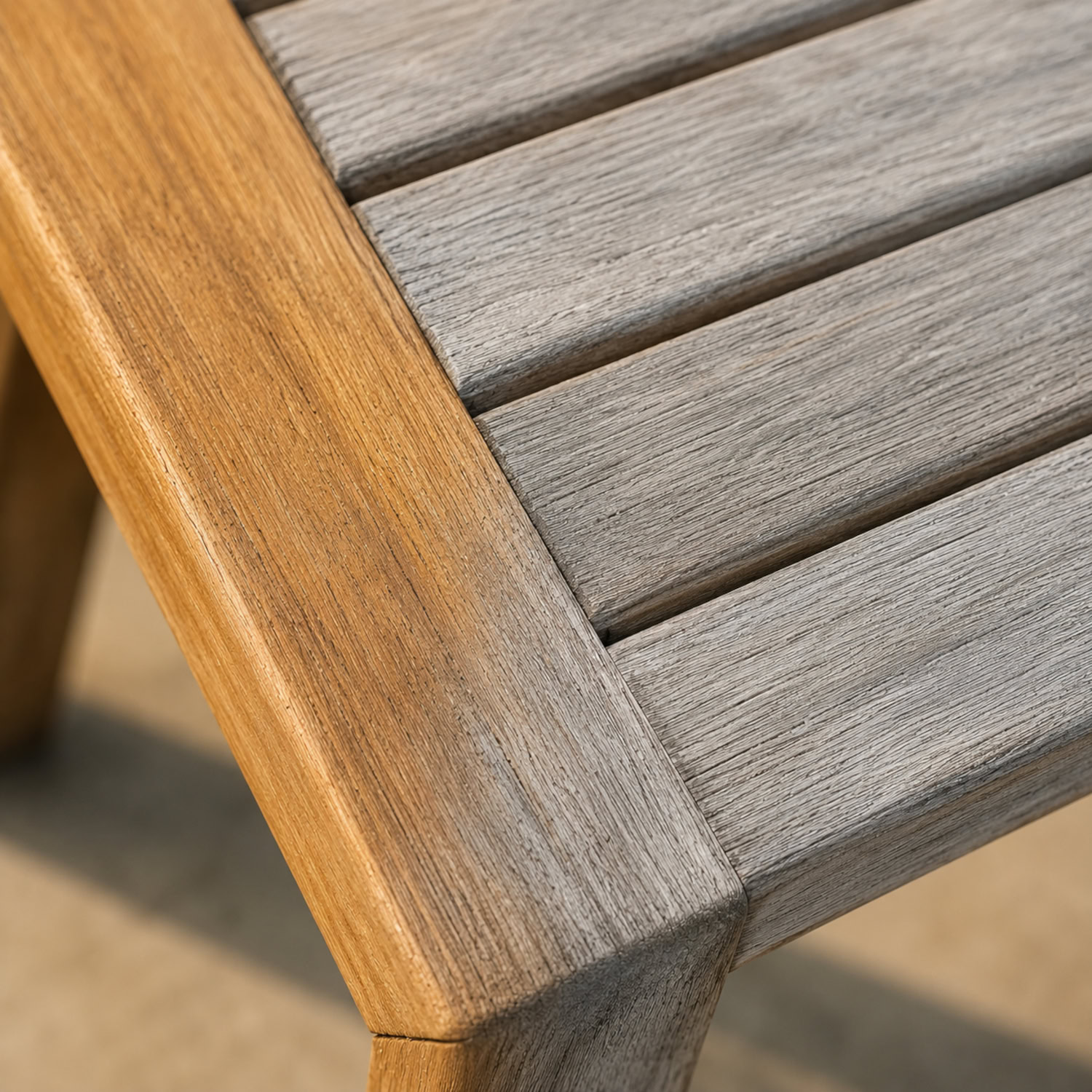
Natural oils resist rot, insects, and water with no treatment, and it handles coastal damp. Weathers gold to silver in one to two years; oil it to keep the gold. Heavy and top of the price range.
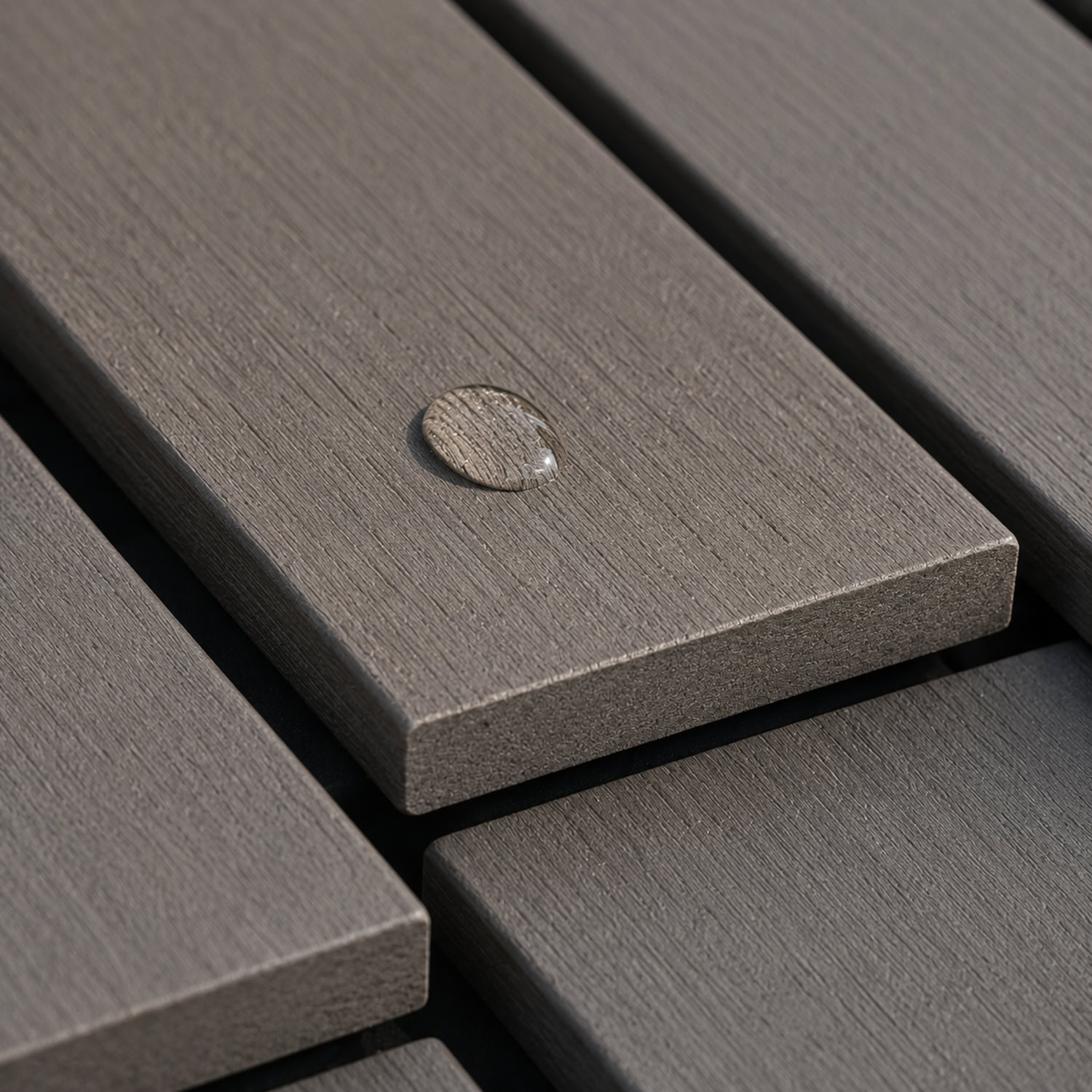
Recycled plastic with UV stabilizers baked in. Won't crack, warp, splinter, rot, or fade, and it shrugs off salt air. Heavier than aluminum and reads as plastic up close. Maintenance is near zero: rinse it.
HDPE fiber over aluminum is fade-proof and easy. Avoid cheap PVC wicker that goes brittle in UV light.
Heavy and wind-stable, but they rust, so coatings need touch-ups. Steel heats up in sun.
Cheap but weathers badly. Scratches, dents, and needs varnish to survive. Skip it outdoors.
| Frame | Maintenance | Weight | Coastal / salt air | Lifespan outdoors | Relative cost |
|---|---|---|---|---|---|
| Powder-coated aluminum | Low (rinse) | Light | Good with quality coating | 10 to 15+ years | Mid |
| Teak | Low to moderate | Heavy | Very good | Decades | High |
| HDPE poly lumber | Very low (rinse) | Heavy | Excellent | Decades | Mid to high |
| Resin wicker | Low | Light | Good | 10+ years | Mid |
| Wrought iron / steel | Moderate (rust touch-ups) | Heavy | Poor for steel | Varies | Low to mid |
| Softwood | High | Moderate | Poor | Short | Low |
This fork changes how the chair feels and how much you will fuss over it.
Set and forget
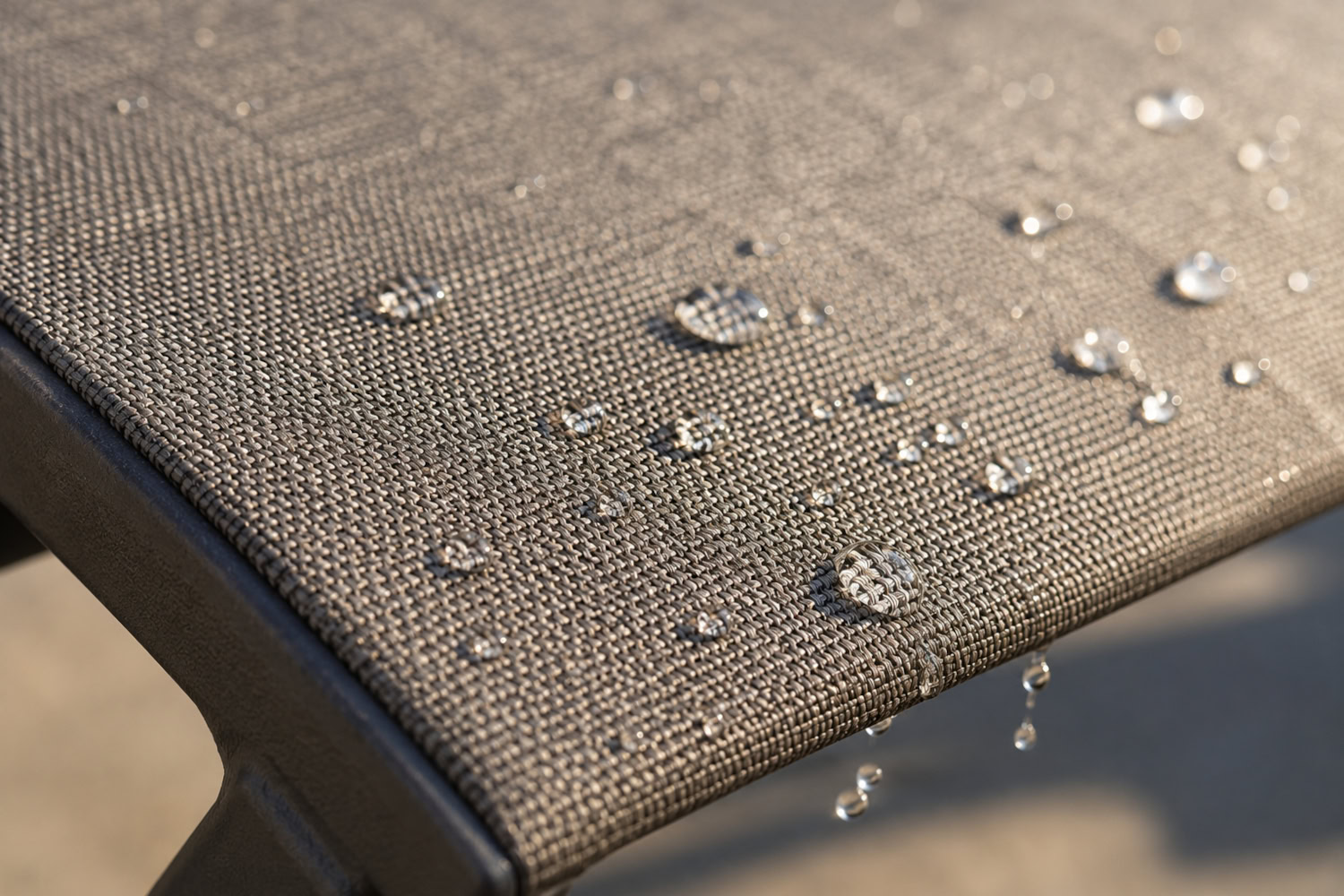
A single mesh panel stretched across the frame. Firm, breathable, dries in minutes, and never grows mildew because water runs straight through.
Comfort first
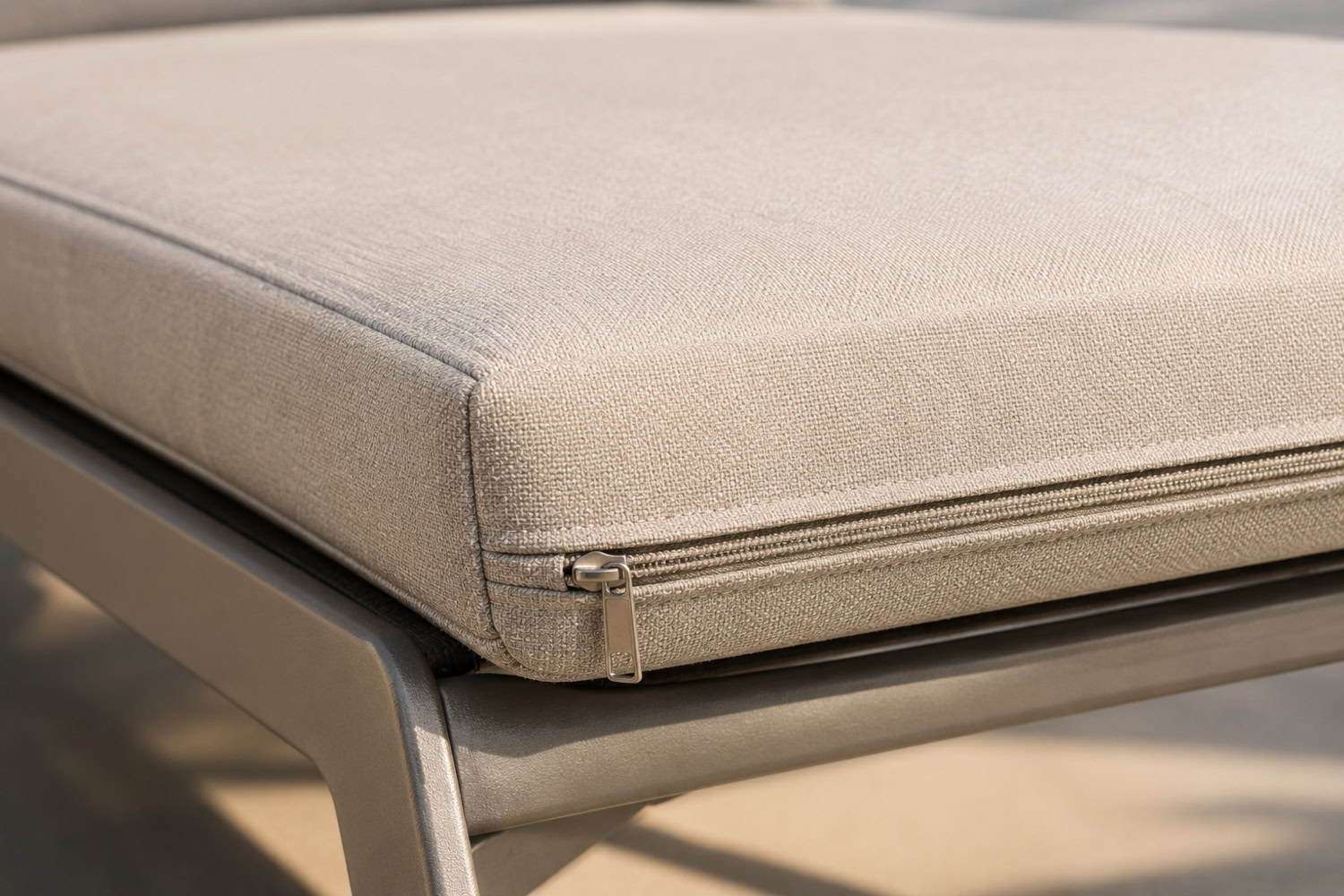
Plush for long lounging, and you can swap covers to change the look. The catch is upkeep: the wrong foam soaks up water and grows mildew.
The fabric is what fades. The foam is what nobody checks and everybody regrets.
Solution-dyed acrylic (Sunbrella is the best-known) has color built into the fiber, so it resists fading, stains, and mildew better than anything else. It is the premium pick for cushions on exposed patios, and it carries the longest warranties.
Textilene and Phifertex are PVC-coated polyester mesh sling fabrics: breathable, water-resistant, quick-drying, and affordable. Lower grades can start fading in one to three years, where acrylic holds color far longer. Fine for a sling you leave in the sun all summer.
For cushions that live outside full-time, use quick-dry (reticulated, open-cell) foam. Water passes straight through, so it drains in minutes, and good versions resist mold. The tradeoff is a shorter lifespan of a few seasons.
Closed-cell foam is the most water-resistant but firm. Standard polyurethane is plush and cheap but soaks up water, so it only works under cover or in dry climates, and it needs a waterproof wrap. If the chair sits uncovered, insist on quick-dry foam.
Most loungers run 73 to 80 in (185–203 cm) long, 20 to 30 in (52–76 cm) wide, and sit low at 12 to 15 in (30–38 cm). Doubles stretch to about 90 in long.
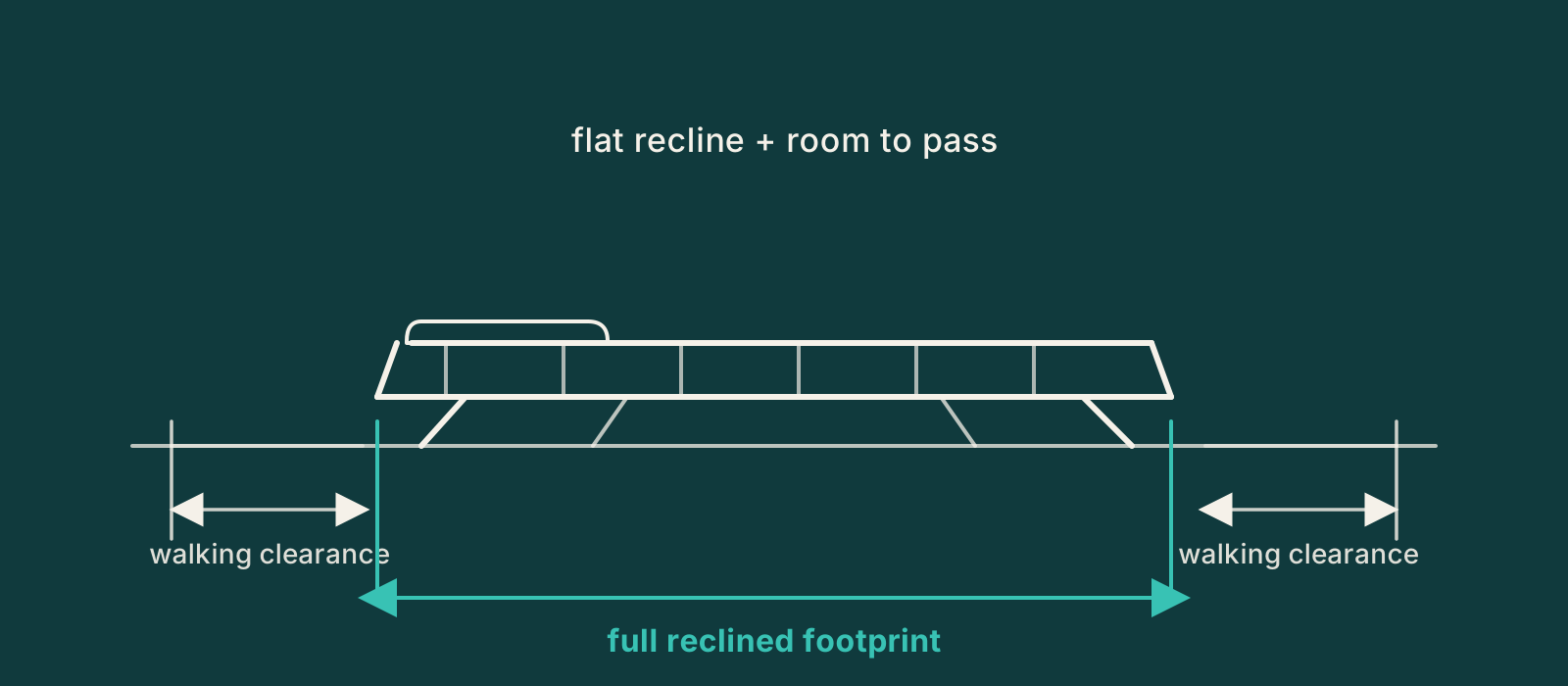
A fully reclined lounger can need 82 in or more. Measure the space flat, not upright.
Leave room to walk around the chair and to fit a side table or umbrella.
Look for at least three recline positions, ideally one that lies flat. Armrests make the low seat easier to get out of, which matters for limited mobility. Wheels help on big decks. A headrest or contoured back pays off for long sessions.
Standard capacity is 250 to 300 lb (113–136 kg); many aluminum models reach 330 to 350 lb. Quality shows in thicker gauges, UV-stabilized materials, rust-resistant hardware, and welded joints. If you check one thing in person, check the joints.
Aluminum and HDPE want an occasional rinse. Teak needs an annual oiling only if you want to keep its gold color. Steel and iron need rust touch-ups when coatings chip.
Brush off loose dirt and spot-clean stains promptly with mild soap and water. To keep mildew off cushions, store them dry and ventilated off-season, use a weather cover, and flip and rotate them so wear spreads evenly.
A waterproof deck box helps if you have no indoor room. Protective covers, side tables, and an umbrella or shade canopy round out the spot and cut UV exposure on both you and the furniture.
Discounts of 30% to 50% off list are common around holidays, but some sellers inflate the "original" price. Judge the chair on its build, not the percentage.
| Tier | Price | What you get |
|---|---|---|
| Budget | $80 to $150 | Folding or resin frames, thin builds. Many fail within two seasons. |
| Mid-range | $200 to $400 | Powder-coated aluminum with quality sling or solution-dyed cushions. The sweet spot for most homes. |
| Premium | $500 to $1,000 | Teak, eucalyptus, quality wicker, adjustable headrests, plush cushions. Lasts if cared for. |
| Luxury / commercial | $1,000+ | Spa-style cushions and commercial-grade construction built for daily use. |
Be wary of flash-sale frames under about $70: thin steel and brittle plastic that fail fast.
Set your budget honestly. Under about $200, expect to replace the chair sooner.
Pick the frame for your climate: aluminum for light and easy, teak for looks, HDPE for coastal.
Choose sling for low maintenance or cushioned for comfort. If cushioned and uncovered, demand quick-dry foam and solution-dyed acrylic.
Measure your space with the chair reclined, plus walking room.
Confirm the weight capacity, at least three recline positions, and welded or reinforced joints.
Add what you need: arms for easy access, wheels for big spaces, a cover and storage plan for cushions.